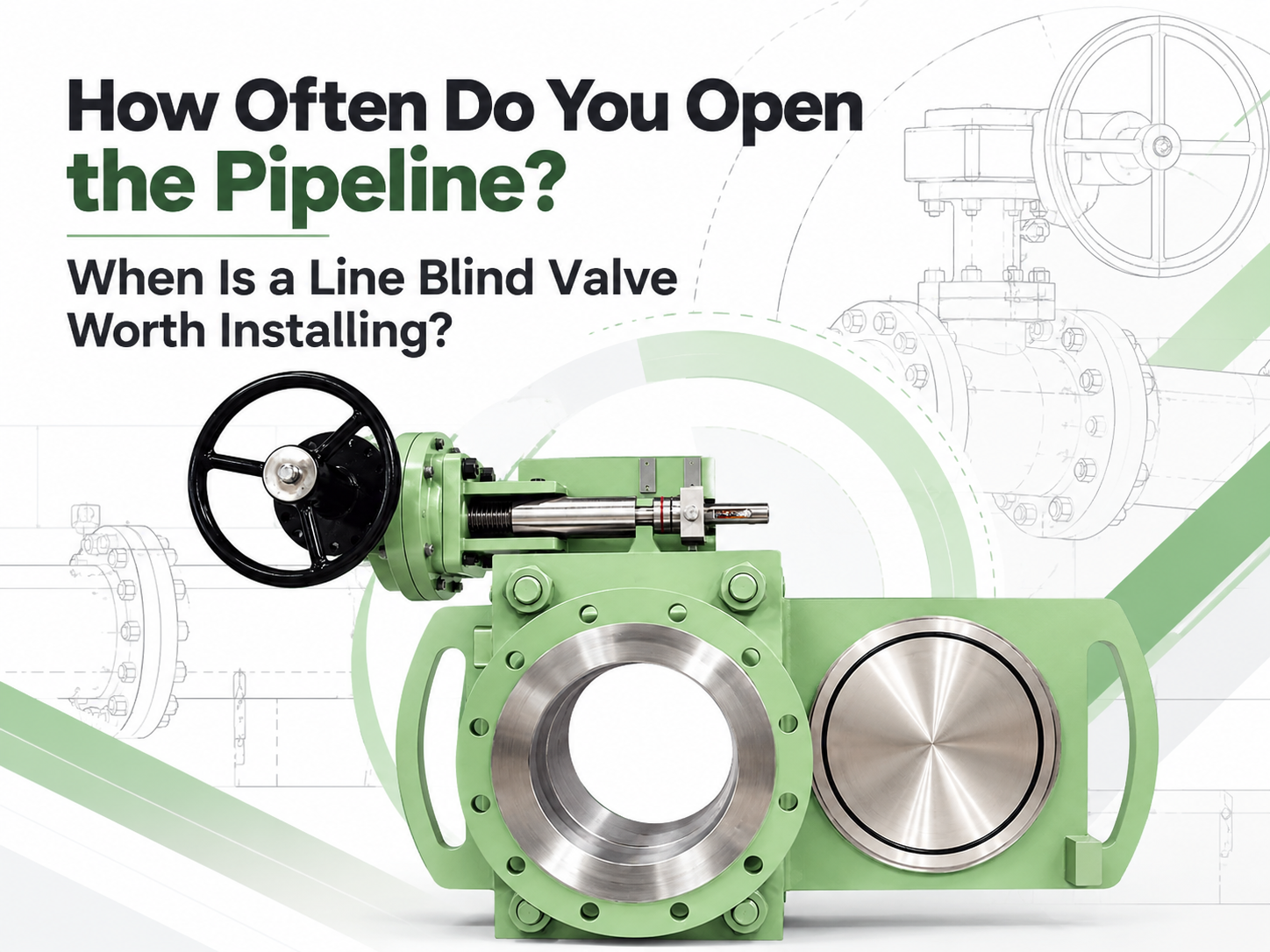
A line blind valve is worth evaluating when a pipeline is blinded several times a year, or when one conventional changeover causes hours of shutdown, lifting work or significant exposure to hazardous residue. No universal cycle count guarantees payback. A large critical line operated twice a year may justify the investment, while a small accessible line operated monthly may not. The decision should be based on the cost and risk of each complete isolation event, not frequency alone. There Is No Standard “Two Operations per Year” Rule Some suppliers use one or two annual changeovers as a screening threshold. That can start a discussion, but it is not an engineering rule. Frequency has very different consequences on a DN50 utility line and a DN600 process-gas main. For a preliminary review, the following bands are useful but not mandatory: Blinding frequency Initial interpretation Once per major turnaround or less A removable blind or spectacle blind is often more economical. One to three times per year Compare labor, lifting, outage duration and medium risk carefully. Quarterly to monthly A quick-action line blind is normally a strong candidate. Weekly or more often Purpose-built or automated isolation deserves detailed review; also confirm that a line blind is suitable for the required cycle duty. A low operating frequency can still support installation when every event requires scaffolding, a crane, several pipefitters or a long production interruption. Conversely, frequent operation does not justify a line blind if the process cannot accommodate its pressure, temperature, materials or maintenance needs. Count the Complete Changeover Traditional blinding is more than moving a plate. After the line is made safe, workers loosen bolting, spread the flange joint, handle the blind or spacer, replace gaskets, restore alignment, tighten the joint and complete leak checks. Large sizes add rigging and access equipment. A quick-action line blind keeps the spectacle or sliding plate supported inside the installed assembly. Manufacturer literature commonly reports one-person changeover in minutes rather than the man-hours needed for conventional flange work. Those figures are useful for screening, but the project calculation should use the plant’s own procedures and recorded shutdown times. Use a simple comparison: Annual avoided cost = operations per year x cost avoided per operation Avoided cost may include pipefitter hours, rigging, scaffolding, gaskets and bolting, leak testing and the production value of saved time. Keep categories separate to avoid double counting. Compare the annual saving with the line blind’s additional installed price and maintenance cost. Risk Can Matter More Than Simple Payback Repeated flange separation creates opportunities for residual-medium exposure, damaged flange faces, poor alignment and inconsistent bolt load...
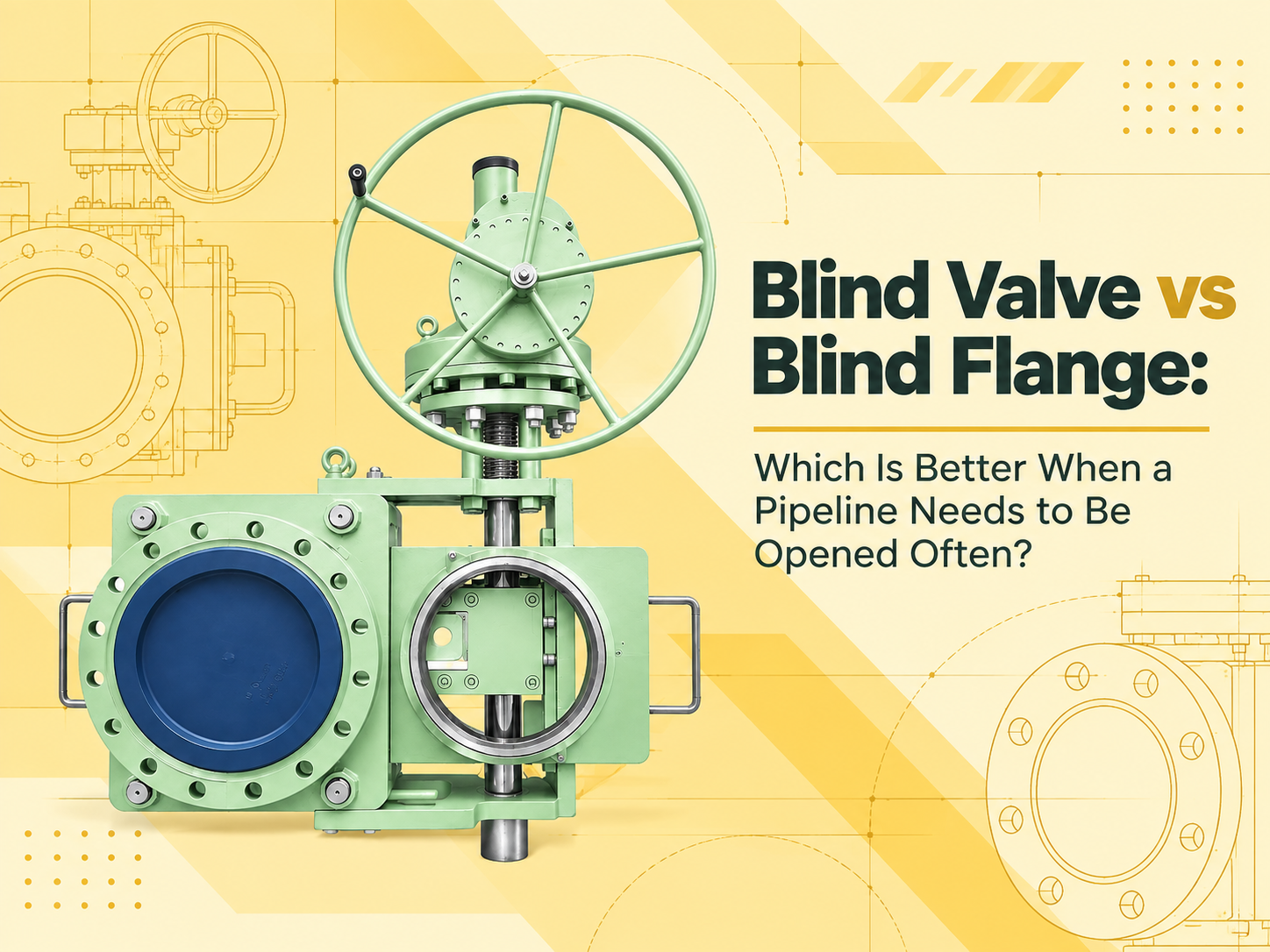
Когда трубопровод необходимо часто открывать и надежно изолировать, поворотная заглушка обычно является лучшим выбором. Она позволяет оставить механизм заглушки постоянно установленным и дает операторам возможность переключаться между открытым и закрытым положениями без необходимости многократного снятия фланцевой заглушки на болтах. Глухой фланец стоит дешевле и имеет меньше движущихся частей, но он лучше подходит для закрытия конца трубы, который будет оставаться закрытым в течение длительного времени. В этом ответе предполагается, что под «глухим фланцем» понимается сплошной фланец, приболченный к концу трубы или патрубка. Очковая заглушка или съемная заглушка-проставка, установленная между двумя фланцами, — это другое устройство, хотя оно и создает аналогичный барьер из сплошного металла для изоляции. Частое открытие меняет расчет стоимости Цена покупки говорит в пользу глухого фланца. Его конструкция проста, а техническое обслуживание в основном сводится к проверке зеркала фланца, прокладки, шпилек и гаек. Если закрытие будет нарушаться только во время периодических остановочных ремонтов, такую простоту трудно превзойти. Повторяющееся открытие меняет картину. Снятие глухого фланца требует остановки линии, сброса давления, дренажа или продувки, а также проверки безопасности. Затем необходимо ослабить болты, обеспечить поддержку фланца и разъединить уплотнительные поверхности. Для фланцев большего размера может потребоваться подъемное оборудование. Повторная сборка требует установки новой прокладки, контролируемой затяжки болтов и проверки на герметичность. Ни один из этих этапов не является необычным, но их повторение превращает недорогой компонент в трудоемкий метод эксплуатации. Поворотная заглушка также требует изоляции и сброса давления в линии перед изменением положения, если только ее утвержденная конструкция и процедура эксплуатации прямо не предусматривают иное. Ее преимущество заключается в механической обработке: пластина, проставка или скользящий элемент остаются закрепленными в корпусе, а механизм разъединяет, перемещает и повторно зажимает уплотнительные поверхности. Ручной привод может подойти для умеренных рабочих усилий; электрический, пневматический или гидравлический привод может быть оправдан для больших размеров или дистанционного управления. Поворотная заглушка сокращает объем работ по перемещению, но добавляет оборудование, требующее обслуживания Для частого переключения поворотная заглушка может сократить время выполнения задачи и уменьшить необходимость многократного перемещения тяжелых пластин, болтов и прокладок. Ее открытое или закрытое положение обычно видно по внешнему индикатору положения, что помогает при проверке на месте. Это также позволяет избежать необходимости постоянно раздвигать соединенные трубопроводы для установки или снятия заглушки. Эти преимущества сопровождаются дополнительным техническим обслуживанием. Направляющие, винты, редукторы, гидравлические компоненты, уплотнения и блокиро...

Да, заглушечный клапан обычно можно добавить в существующий трубопровод, но эта работа редко бывает такой простой, как вырезание короткого участка и установка клапана. Клапан должен соответствовать существующим фланцам и классу давления, но это лишь первая проверка. Ему также требуется пространство для освобождения уплотнительного механизма, перемещения заглушки, повторного зажима и обеспечения доступа для будущего обслуживания. Модифицированный трубопровод должен быть закреплен, осмотрен и испытан перед возвращением в эксплуатацию. Клапан, который помещается между концами труб, но не может выполнить полный рабочий ход, не пригоден для модернизации. Начните с полного рабочего диапазона Строительная длина показывает, сколько трубы необходимо удалить. Она не показывает, сколько места потребуется клапану, когда он начнет движение. Поворотный заглушечный клапан требует свободного пространства для дуги движения очковой заглушки. Это пространство может значительно выходить за пределы корпуса клапана. Близлежащие трубопроводы, кабельные лотки, перила, платформы, изоляция и металлоконструкции могут блокировать движение. Для сдвижной конструкции требуется достаточно места, чтобы пластина могла перемещаться вбок или вертикально. Приводной механизм, редуктор, гидравлический цилиндр или исполнительный механизм требуют дополнительного свободного пространства. Проверьте чертеж общего вида от производителя на предмет: ● Строительная длина ● Максимальная ширина и высота корпуса ● Полный ход пластины или радиус поворота ● Зазор для маховика, редуктора или исполнительного механизма ● Пространство, необходимое для снятия уплотнений и внутренних деталей ● Точки подъема и доступ для такелажных работ ● Безопасное положение для оператора Не измеряйте расстояние только от осевой линии клапана. Редуктор может не задевать соседнюю трубу, в то время как заглушка может удариться о нее на середине хода. Ориентация также имеет значение. На вертикальных трубопроводах некоторые конструкции требуют определенного положения механизма, чтобы гравитация не сместила незакрепленный компонент. Например, инструкции производителя для одной конструкции с кулачковым приводом требуют, чтобы кулачковый механизм был установлен ниже очковой заглушки на вертикальной линии. Проверьте существующий трубопровод перед выбором клапана Старые чертежи полезны, но окончательная подгонка должна основываться на полевых измерениях. Существующие трубопроводы могли быть отремонтированы, перенаправлены или смещены с момента выпуска оригинальных чертежей. Зафиксируйте фактические данные: ● Внешний диаметр и сортамент трубы ● Стандарт фланца, размер, класс и тип уплотнительной поверхности ● Расстояние между зеркалами фланцев или предлагаемыми точками реза ● Осевая линия трубы и ориентация фланца ● Доступный люфт в существующей линии ● Толщина изоляции и обогрева ● Близлежащие опоры, направляющие и компенсаторы ● Рабочее и расчетное давление и температура ● Среда, припуск на коррозию и спецификация мат...


Авторское право © 2015-2026 DERVOS VALVE CO.,LTD.Все права защищены Блог / Карта сайта / XML / политика конфиденциальности