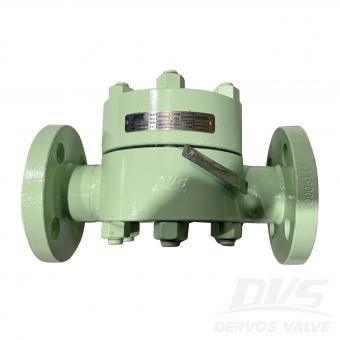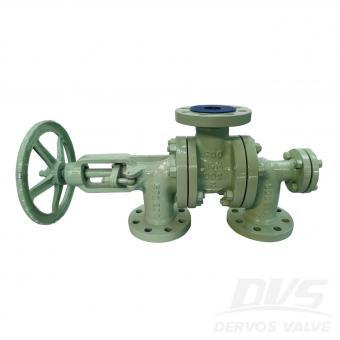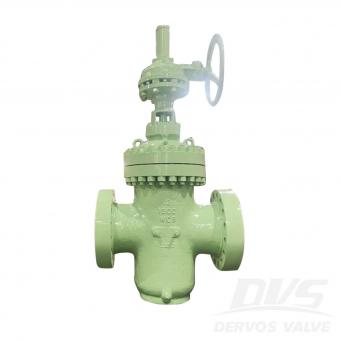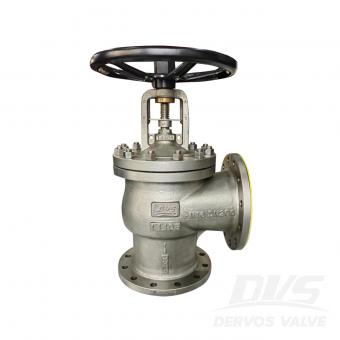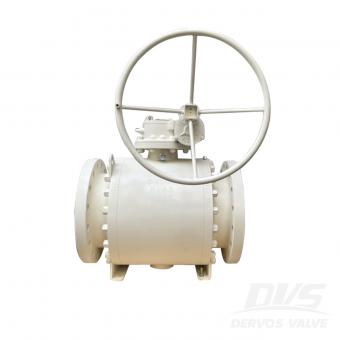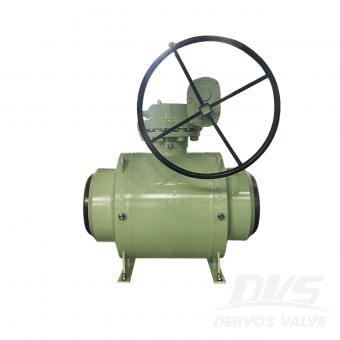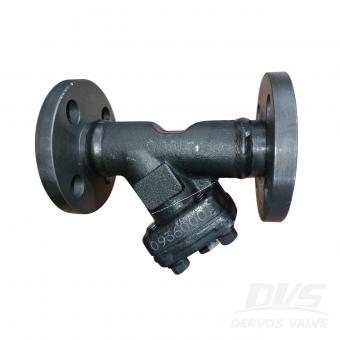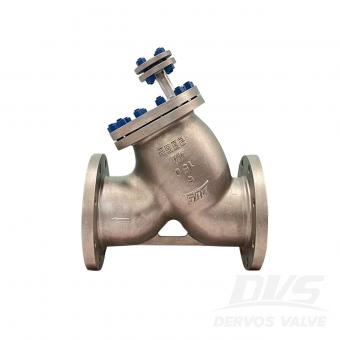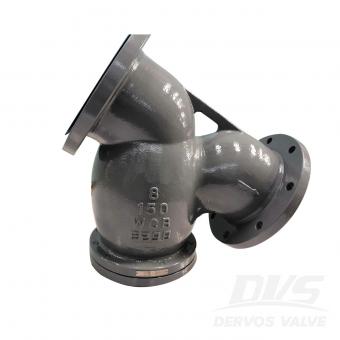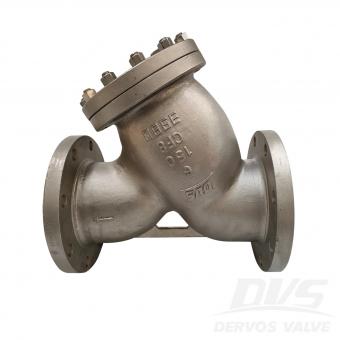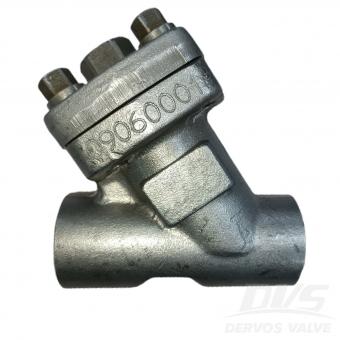
1. Suzhou Neway Valve Co., Ltd. — NEWAY NEWAY is one of China's most internationally recognized industrial valve manufacturers. Its product range includes ball valves, gate valves, globe valves, check valves, butterfly valves, cryogenic valves, subsea valves, and other engineered valve solutions. The company has strong experience in oil and gas, LNG, petrochemical, offshore, and power applications. Best suited for: large-scale energy projects and severe-service applications. 2. CNNC Sufa Technology Industry Co., Ltd. CNNC SUFA is well known for its experience in nuclear power and other high-integrity industrial applications. The company has strong capabilities in material traceability, engineering control, testing, and specialized valve manufacturing. Its products are also used in petroleum, petrochemical, power, and chemical industries. Best suited for: nuclear power, high-integrity systems, and technically demanding projects. 3. DERVOS VALVE DERVOS VALVE supplies industrial valves to customers in oil and gas, petrochemical, power generation, water treatment, marine, and general industrial applications. Its main products include ball valves, gate valves, globe valves, check valves, butterfly valves, plug valves, knife gate valves, line blind valves, and strainers. DERVOS supports international standards such as API, ASME, EN, and DIN, and can provide carbon steel, stainless steel, alloy steel, duplex stainless steel, low-temperature steel, and other materials. One of its key strengths is flexibility. DERVOS can support mixed valve packages, small-to-medium quantities, customized specifications, and project-specific documentation. Best suited for: overseas distributors, EPC projects, customized valves, mixed orders, and flexible sourcing requirements. 4. Yuanda Valve Group Yuanda Valve Group is one of China's large-scale valve manufacturers with broad production capacity. Its product range includes gate valves, globe valves, check valves, butterfly valves, ball valves, and other general industrial valves. The company is widely involved in water supply, HVAC, municipal infrastructure, power, and industrial pipeline projects. Best suited for: large-volume standardized valve procurement and general industrial applications. 5. Jiangsu Shentong Valve Co., Ltd. Jiangsu Shentong focuses strongly on specialized valve applications in metallurgy, energy, nuclear power, and chemical industries. Its strength lies in engineered products for demanding operating conditions rather than only standard valve production. Best suited for: metallurgy, energy, chemical processing, and specialized industrial applications. 6. Chaoda Valves Group Co., Ltd. Chaoda Valves Group serves petroleum, chemical, natural gas, power, and other process industries. Its product range includes ball valves, gate valves, globe valves, check valves, butterfly valves, and special-purpose industrial valves. The company has experience with corro...
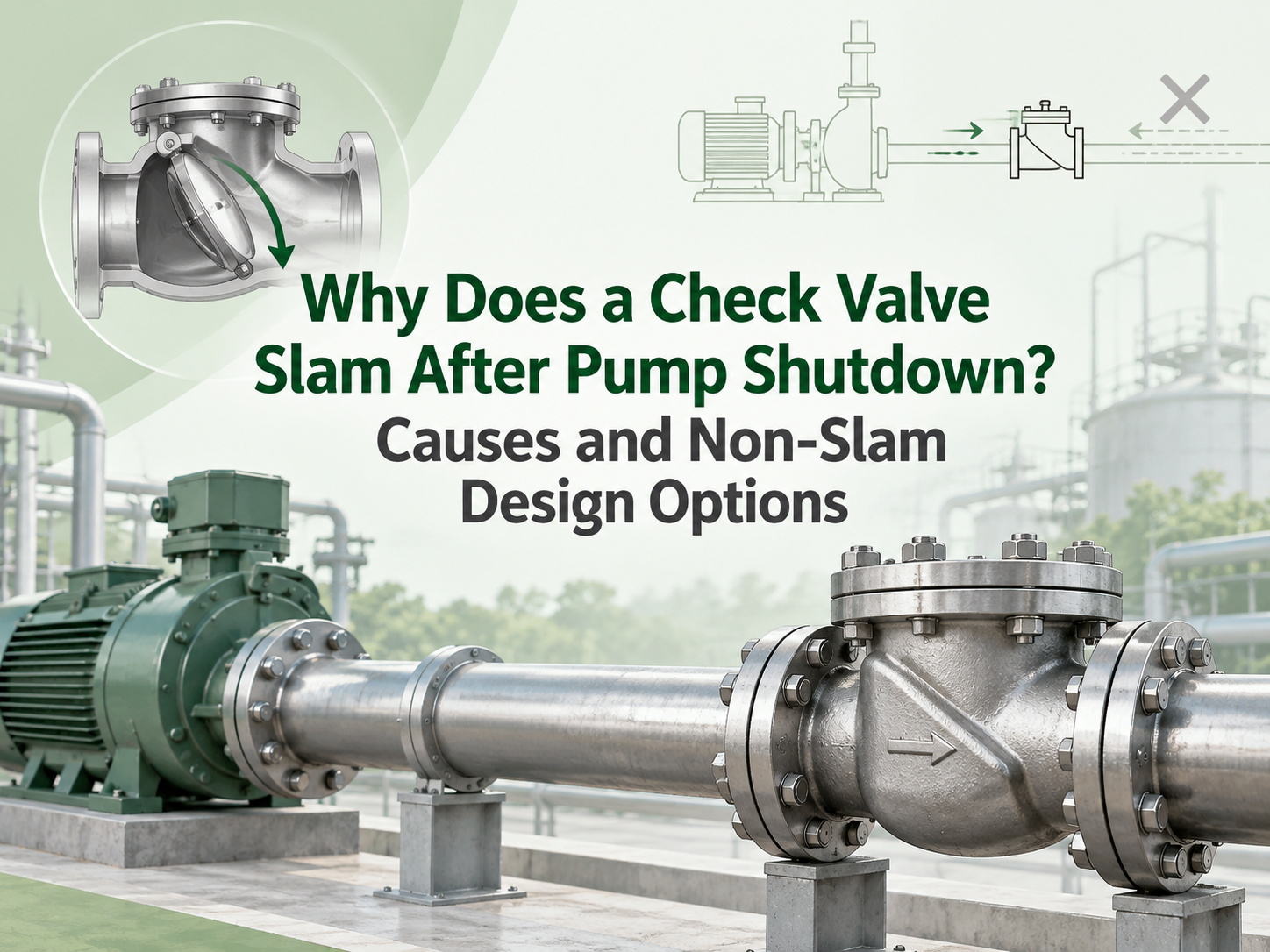
A check valve slams after pump shutdown when flow reverses before the closure member reaches its seat. The valve then stops that reverse velocity abruptly, creating a pressure wave through the piping. The damaging event is usually the rapid arrest of the liquid column, not simply the disc hitting the seat. A “non-slam” label alone is not a solution; the valve response must suit the system's flow deceleration. The Valve Is Closing Too Late for the Shutdown Transient When pump torque disappears, forward velocity falls. Static head, a pressurised common header or another running pump may then drive liquid back toward the stopped pump. If inertia and hinge friction keep a conventional swing disc open through zero flow, reverse velocity develops before the disc reaches its seat. High static lift, a steep rising main, short pump coast-down, parallel pumps and high initial velocity can accelerate this reversal. A long-stroke or high-inertia valve is more likely to lag. This is why the same valve may run quietly in one system and slam in another: nominal size and pressure class do not define shutdown behaviour. Confirm the Event Before Changing the Valve A single hard bang after shutdown points toward check-valve closure or another surge event. Continuous clicking during forward flow is chatter, which more often indicates unstable partial opening, pulsation or poor hydraulic sizing. Record the stop command, motor speed decay, flow direction and pressures on both sides of the valve on a common time base. A high-speed video of an external lever or position indicator can help show when the valve closes. For consequential systems, fast pressure logging is more reliable than sound alone. Inspect the hinge, shaft, spring and seat for friction, wear, deposits or damage, and verify the permitted installation orientation. Check pipe supports as well; the pressure wave may produce its loudest noise away from the valve. Non-Slam Designs Use Different Closing Strategies An axial-flow or nozzle check valve uses a light, centrally guided disc, short travel and spring assistance. It begins closing as forward flow falls, ideally seating before appreciable reversal. It is a strong candidate for rapid pump trips, but pressure loss, cracking pressure, minimum stable flow, orientation and tolerance of solids still matter. A spring-assisted dual-plate valve uses two lighter plates and shorter travel than a conventional swing disc. Its compact construction can improve response, but “dual plate” does not mean slam-free. Plate inertia, spring torque, size and mounting position remain relevant. Tilting-disc, resilient-hinge and spring-assisted swing designs reduce travel or assist closure while retaining a relatively open flow path. They can suit large water lines where energy loss matters, provided dynamic data supports the selected design and size. Large pumping mains ma...
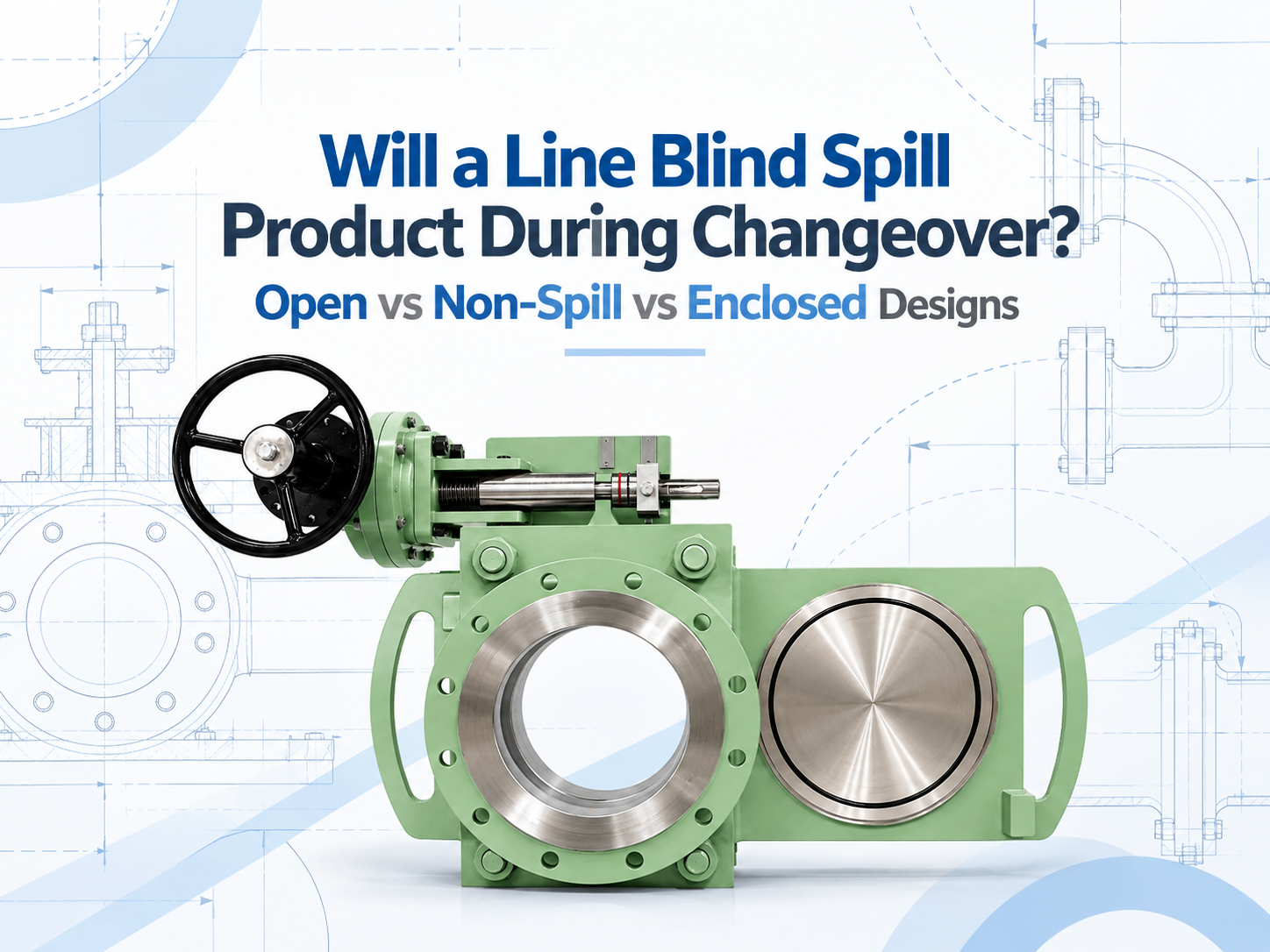
Да, обтюратор с открытым корпусом может выделять остаточный продукт при переходе между открытым положением и положением заглушки. Конструкция с защитой от проливов не заставляет эти остатки исчезать; она улавливает жидкость в частичном кожухе и направляет ее в дренаж. Закрытая конструкция может обеспечить лучший контроль жидкости и паров, но только тогда, когда ее корпус, дренажные, вентиляционные и продувочные соединения рассчитаны на данные условия работы. Ни одно из этих наименований не следует воспринимать как разрешение на перемещение заглушки под давлением в действующем трубопроводе. Почему продукт может выходить во время переключения Когда линейная заглушка полностью зажата, ее уплотнения удерживают рабочую среду, а сплошная пластина обеспечивает надежную изоляцию в положении заглушки. Переключение происходит иначе. Уплотнительные поверхности должны разделиться до того, как очковая или сдвижная пластина сможет сместиться. В течение этого интервала полость корпуса и путь перемещения пластины могут быть открыты в окружающую среду. Линия уже должна быть изолирована, сброшено давление и выполнено дренирование, но «дренированная» редко означает абсолютно сухая. Жидкость может оставаться в виде пленки на пластине, скапливаться в нижней части корпуса или находиться в плохо дренируемом кармане трубы. Работа с газом может оставлять огнеопасные, токсичные или пахучие пары. Количество выделений поэтому зависит как от компоновки трубопровода и процедуры останова, так и от самого обтюратора. Три конструкции управляют остатками по-разному Открытый корпус Остатки жидкости могут капать с открытого пути пластины в временный поддон или рабочую зону, в то время как пары рассеиваются на месте. Такое исполнение может подойти для воды, конденсата пара или других контролируемых сред, где важны легкий доступ и визуальный осмотр. Оно представляет наибольшую потенциальную опасность загрязнения пола и воздействия на оператора. Конструкция с защитой от проливов Нижняя и боковые крышки улавливают капли и направляют их в дренаж или емкость для сбора; верх может оставаться открытым. Эту конструкцию обычно рассматривают для топливных терминалов, морских условий и работы с жидкостями, где необходимо контролировать загрязнение земли или палубы. Она уменьшает капельное падение, но может не удерживать пары, а забитый дренаж сводит на нет ее назначение. Закрытая конструкция Кожух окружает большую часть или весь путь движения пластины и может соединяться с закрытым дренажем, системой продувки, вентиляции, факельной системой или системой рекуперации паров. Она лучше подходит для токсичных, легковоспламеняющихся, пахучих или экологически чувствительных сред, требующих контролируемой локализации. Обратной стороной является большая сложность продувки, осмотра и технического обслуживания, а также необходимость целенаправленного управления запертым давлением. Эти названия не полностью стандартизированы среди производителей. Модель «с защитой от проливов» у одно...


Авторское право © 2015-2026 DERVOS VALVE CO.,LTD.Все права защищены Блог / Карта сайта / XML / политика конфиденциальности